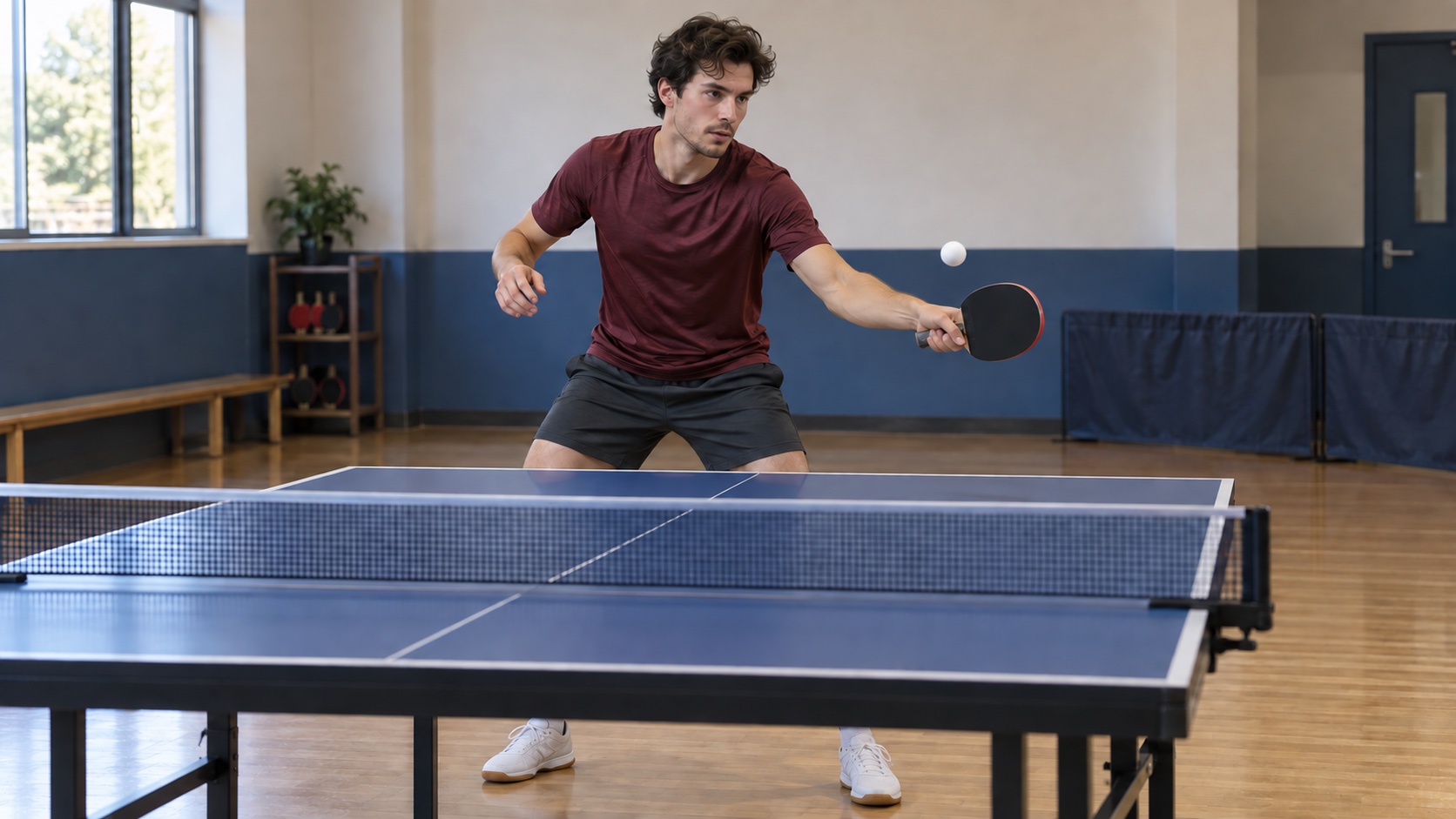
You swing upward, but the ball still shoots long. On the next attempt you barely catch it and it drops into the net. Between those two contacts is the skill you are trying to learn: brushing the ball while giving it enough forward travel to reach the other side.
To learn how to spin the ball in table tennis, start with one task: a controlled forehand topspin against an easy feed. It suits players who can already exchange basic forehand drives. You will work on contact, then the flight of the ball, before asking a partner to keep a short rally going. Serves, sidespin and opening against heavy backspin can wait until this contact becomes familiar.
Let the racket travel across the ball
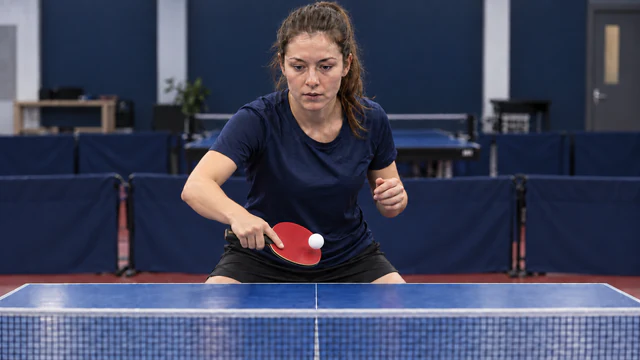
Think about the direction the rubber moves as it meets the ball. A stroke that goes mainly straight through it produces a different result from one that also travels upward across its surface. For this basic topspin exercise, prepare below the intended contact and swing forward and upward in one continuous movement.
You still need a useful contact. Trying to brush so thinly that the racket almost misses the ball can make the shot fragile. Equally, hitting harder without changing the contact may simply send the ball farther. Start at a pace where you can notice the difference between a glancing miss, a flat hit and a controlled brushing contact.
The racket face is not fixed at one angle for every ball. Begin with a modestly closed face and adjust it to the feed. Keep the grip comfortable enough to move freely, but secure enough that the racket does not wobble. There is no need to squeeze the handle as hard as possible or force a last-second wrist flick.
Give yourself room to make the contact
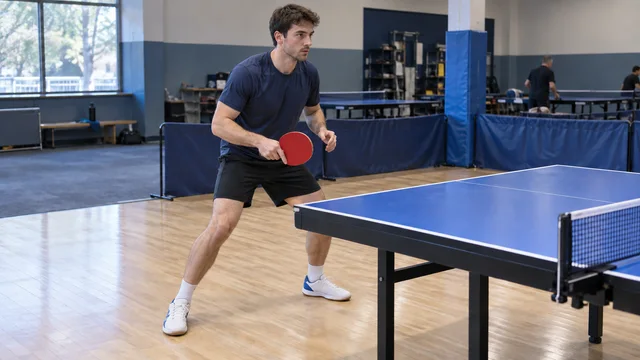
A ball too close to your body leaves little space for the racket to move. Ask your partner to feed consistently to your forehand, and adjust your feet so you can meet the ball comfortably beside and in front of you. A small turn of the body can support the stroke; avoid trying to create all the movement with a cramped hand.
Use a manageable contact height while learning. Meeting an easy feed around the top of its bounce is a practical starting point, not a rule for every rally. If the ball is already low and close to you, reset the feed rather than forcing the same swing through a different situation.
Drill 1: Find the brushing contact with a self-feed
The aim: Recognize a repeatable contact before adding a partner's timing.
- Stand at the forehand side with enough space for a short swing and keep loose balls out from under your feet.
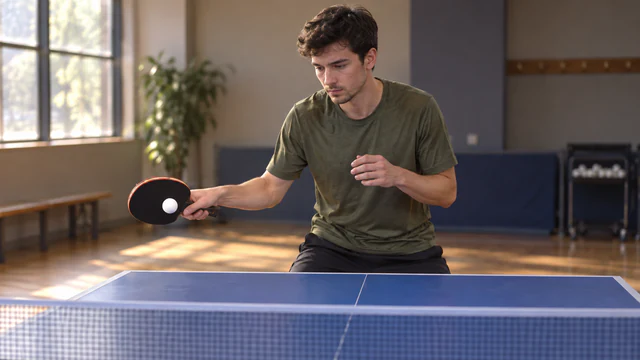
- Gently drop a ball onto your half of the table, far enough from your body to leave room for the racket.
- After the bounce, play a small forehand forward and upward toward a broad area across the net.
- Repeat the same feed and compare the contact and flight, without increasing your effort.
This is a contact exercise, not a legal serve. Keep the self-feed simple and repeatable. A ball sent high into the air creates an unnecessary timing problem; a ball dropped right against the body makes it hard to swing naturally.
Do not judge spin from a loud sound alone. Watch whether you can repeat the intended flight and landing while retaining a brushing contact. Ordinary video can help you see the swing, but it does not give an accurate spin rate just because the shot looks fast.
Drill 2: Repeat against a gentle forehand feed
The aim: Keep the contact when someone else supplies the ball.
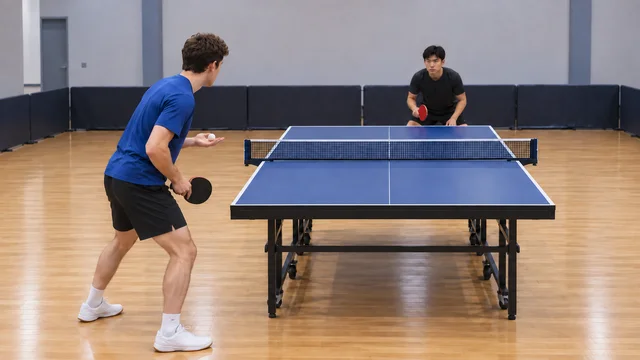
- Ask a partner for easy, consistent balls to the same forehand area.
- Start with single feeds and a pause between them so you can reset.
- Send each topspin toward a generous target with room inside the end line and sideline.
- Move into a short sequence only when the feed and your contact remain comfortable.
When learning how to spin the ball in table tennis, a predictable feed helps you compare attempts. If one ball arrives high with topspin and the next arrives short with backspin, a different result does not necessarily mean your previous adjustment failed.
Ask your partner to describe what they receive: is the ball easy to block, unexpectedly fast, or difficult to keep down with the same passive racket? This is useful feedback, not a measurement of revolutions per minute. Combine it with your own contact and landing observations.
Drill 3: Change one part of the arc
The aim: Connect a small adjustment with what the ball actually does.
- Keep the same feed, target and comfortable effort.
- Play a short sequence with the stroke that worked in the previous drill.
- If the ball keeps landing long, try a slightly more closed face while keeping the swing smooth.
- If it keeps catching the net, check spacing and contact first, then try a little more upward travel or a less closed face.
These are experiments, not automatic fixes for every miss. A late contact, an inconsistent feed or a racket that barely touches the ball can produce similar errors. Change one detail, repeat the same situation and see whether the result becomes more dependable.
Avoid trying to draw a high arc with your fingers while the rest of the stroke is rushed. Let the full, manageable action create the shot. Once you can repeat it, ask for a slightly less predictable feed rather than immediately swinging much harder.
Keep the useful change
Finish by returning to the simple feed and the broad target. Learning how to spin the ball in table tennis is easier to assess when you can name what changed: more room at contact, a smoother upward path or a racket face that suits the ball. Keep that one cue for the next session and build the rally around it.