The serve looks short when it lands near the net, but then the ball keeps travelling and drops off the end of the table. On the next attempt you soften the contact so much that it catches the net. It is easy to move between those two misses without knowing which part of the serve needs attention.
This table tennis serve training session separates length from height. Begin with one familiar serve and let the ball travel without a receiver. Once you can see where it would bounce again, add a landing area and then a partner. You need a table, a few balls and time to watch each serve finish its path.
Keep a legal routine from the first ball
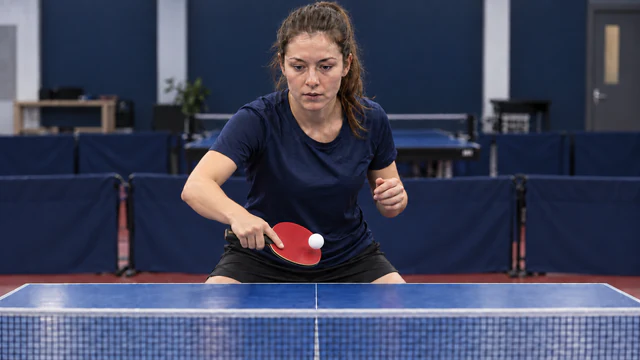
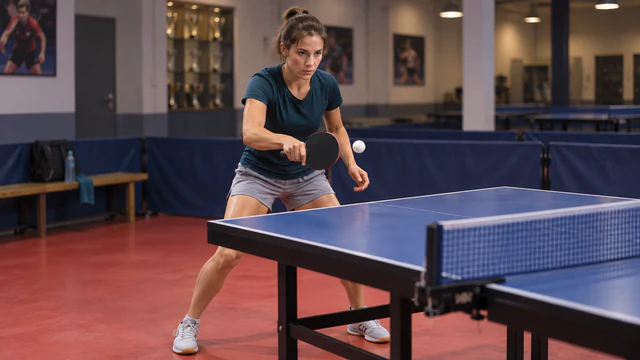
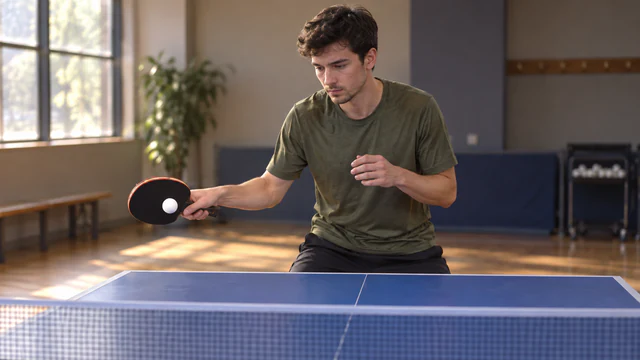
Rest the ball on your open, stationary free hand. Toss it near vertically, without adding spin, at least 16 cm upward from the palm, and strike it as it falls. Until contact, the ball must remain above the playing surface, behind your end line and visible to the receiver. Move the free arm out of the space between the ball and net after the toss.
The serve must bounce on your half before reaching the receiver’s half. In doubles, those bounces must be in the appropriate right half-courts. Keep the same legal routine when practising alone; a lower toss or hidden contact is not a way to make a difficult short serve easier.
Settle before each attempt instead of rushing through a basket. A consistent start makes the results easier to compare and gives you a routine you can carry into a game.
Read the second bounce on the receiver’s side
For this practice, a useful length check is whether an unreturned serve would bounce a second time on the receiver’s half before leaving the table. That is the third table contact in the full sequence: once on your side, then twice on the far side.
The first landing near the net does not prove the serve is short. Watch what happens next. Equally, a serve can stay short while sitting high enough for a receiver to attack. Keep length and net clearance as two separate observations.
Your own-side bounce is one adjustment point, but it does not control everything by itself. Contact height, direction, speed and spin also affect the flight. Choose one familiar serve and one direction while you learn to read the result.
Drill 1: Let the ball finish its path
The aim: Recognise short length without relying on a receiver’s reaction.
- Serve with no receiver and let the ball continue bouncing.
- Watch whether the second bounce on the far half remains on the table.
- Make a separate note of whether the serve crosses the net low or sits up.
- Repeat a small batch, such as five serves, before choosing one adjustment.
Five is an example of a convenient practice batch, not a required amount. Collect the balls between batches so you can keep your attention on the same serve rather than immediately moving to a new variation.
If the ball consistently travels long, reduce the forward impulse slightly while keeping clean contact. If the next attempts catch the net, check the flight and contact consistency instead of immediately going back to a harder strike. The aim is to find a repeatable middle ground.
Drill 2: Add a landing area
The aim: Keep the serve short while giving it a deliberate direction.
- Choose a broad area on the receiver’s half, using the existing table lines as landmarks.
- Play the same serve toward that area without adding a new spin variation.
- Let the ball continue so you can check the next bounce as well as the first landing.
- Count a useful result when it reaches your intended area and still passes the short-length check.
Keep the area generous enough to show a pattern. Aiming at a tiny spot too early can make every attempt look like a failure even when the length is becoming more consistent.
In table tennis serve training, changing placement, speed and spin together makes it difficult to know why the result changed. Stay with this one task until you can describe the common miss, then adjust the detail most closely connected to it.
Drill 3: Bring the receiver back
The aim: Keep your familiar serve when someone is waiting to return it.
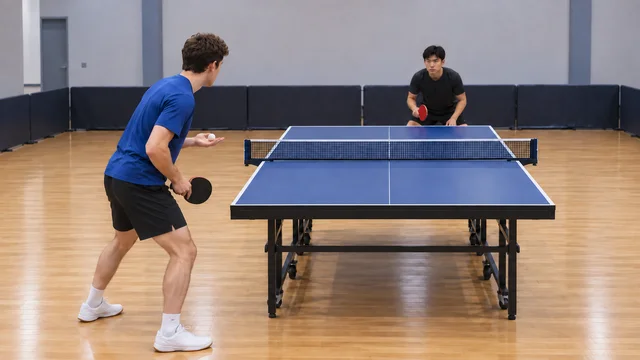
- Ask a partner to receive normally while you keep the same short-serve intention.
- Use the preparation and target from the previous drill.
- Observe the flight and the return, then prepare for the next ball.
- Alternate a few received serves with a few unreturned serves to check the length again.
A receiver prevents you from seeing the second bounce, so their response cannot replace the earlier measurement. They may play a good return from a useful serve or make a mistake on a loose one. Use the return as another observation rather than treating every lost point as evidence that the serve failed.
If the presence of the receiver makes you rush, go back to the settled routine from the first drill. Keep the serve familiar before adding more pressure.
Match the correction to the miss
Short but high: Work on lowering the flight while preserving enough forward travel. Simply taking all the pace off may leave the ball short of the net.
Low but long: Work on length with the same contact and direction. Use the second-bounce check to see whether a smaller forward impulse helps.
Repeated net misses: Check clearance and clean contact before trying to add more spin. A more complicated serve is harder to assess when the basic flight is inconsistent.
Different results on every attempt: Return to one serve, one target and an unhurried preparation. Compare a batch before making another change.
Choose one thing to repeat next time
Finish table tennis serve training with the serve you used at the start. Compare its height and second bounce with your opening attempts. Keep one useful adjustment for the next session, whether that is a steadier start, a lower flight or more reliable length. Placement and variation become easier to develop when you have a serve you can recognise and repeat.