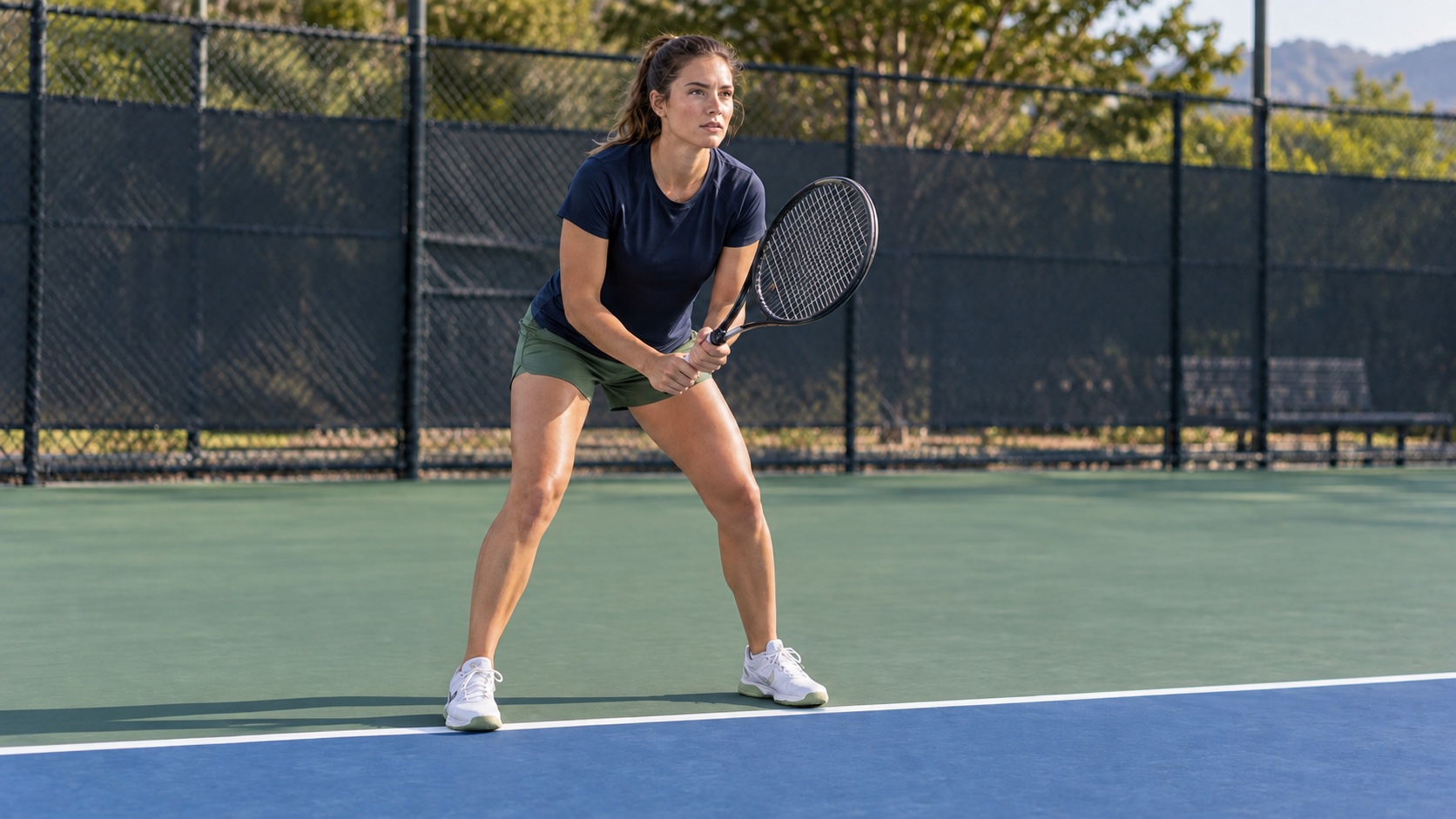
You can rally comfortably, yet a serve makes the same forehand feel rushed. The ball arrives before the racket is ready, and the big swing that worked from the baseline becomes difficult to finish. The first task is to make enough room and time for a manageable return.
These tennis return of serve drills focus on singles players who can already rally and serve at a controlled pace. Work with a partner who can repeat an easy serve. Start with one known placement, then introduce a choice and the next shot. The goal is to enter the rally in balance, with a clear target, rather than win every point with the return.
Make the ready position useful
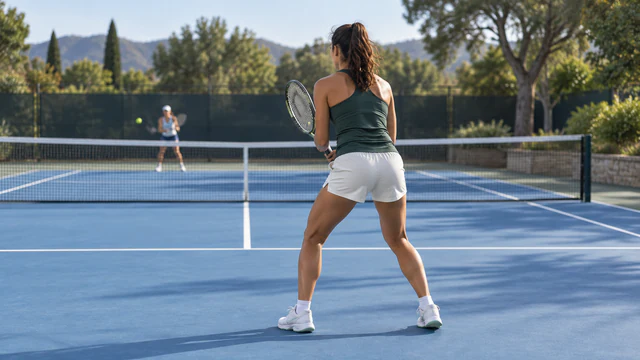
Stand where you can cover the likely serve directions and meet the ball at a comfortable distance. Keep the knees comfortably bent and the racket available in front. Choose a waiting grip that lets you change to either side using the grip routine you already practice; there is no single starting grip that suits every forehand and backhand combination.
Coordinate a small split step with the server's hitting rhythm. You want to settle into a base from which you can move as you recognize the ball's direction. Jumping high, landing rigidly or finishing the hop long before the serve gives you another task to recover from.
Use the incoming serve to judge your starting position. A faster ball may call for more space; a slower ball may let you move closer. Make one modest adjustment and try the same serve again. Do not adopt a fixed distance behind the baseline simply because it suits another player.
Shorten preparation when the serve takes away time
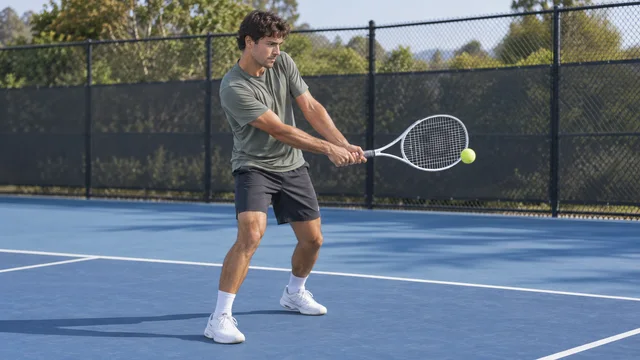
A return does not always need the backswing you use during a slower baseline rally. Turn promptly and organize the racket behind the approaching ball without a large loop. Keep the arms coordinated with the body rather than locking them tightly against it.
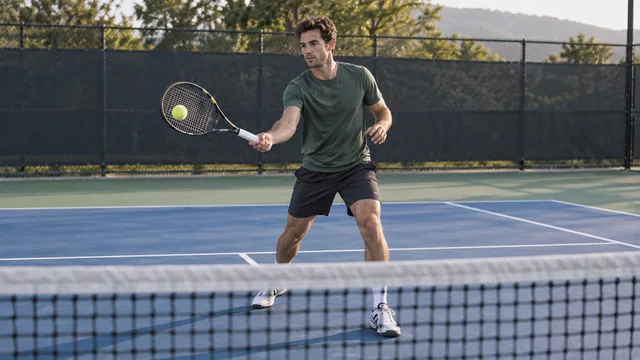
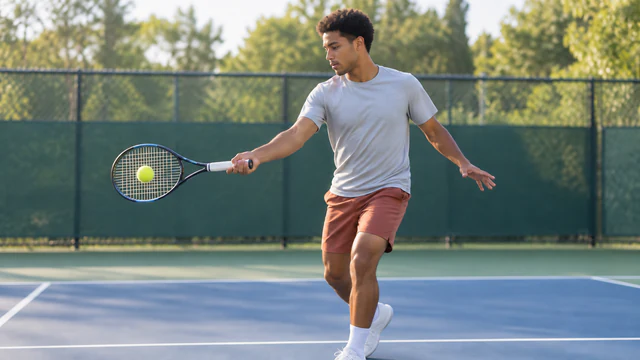
Meet the ball after its bounce, with enough space in front to direct the return. Let the stroke continue naturally. A compact return still has preparation and follow-through; it is not a motionless racket held out in hope.
The bounce matters: you cannot volley a serve. If a high bounce is uncomfortable, adjust your position or contact timing after the bounce. Taking the serve out of the air loses the point.
Drill 1: One serve direction, one return target
The aim: Organize preparation without having to guess the placement.
- Ask your partner to serve at an easy pace to one agreed part of the service box.
- Start in your ready position and use the server's action to time your small split step.
- After the bounce, return with a compact stroke toward a generous target inside the court.
- Stop after the return, reset and repeat before changing sides.
Choose a target that fits the serve. For a serve toward the body or T, begin with a broad middle area. For a wide serve, a comfortable crosscourt return often gives you more room than trying to redirect down the line. Keep the target well inside the boundaries.
Use a short series to notice the first source of trouble. If the ball feels cramped, review spacing. If the racket is still moving backward as the ball reaches you, simplify preparation. Slowing the serve is a useful adjustment while you establish the movement.
Drill 2: Two placements at the same manageable pace
The aim: Choose the movement from the actual serve rather than a memorized pattern.
- Let the server choose between two agreed locations, such as a wider ball and one nearer the body.
- Keep the pace similar to the first drill.
- Watch the serve, adjust your feet and use the target that suits the incoming direction.
- Stop and reset after each return so you can compare decisions as well as misses.
Tennis return of serve drills become less useful when the server suddenly tries maximum pace. Add uncertainty in placement first. You can increase speed later, once both players can keep the practice organized.
Avoid committing fully to one side based only on the toss. Notice patterns, but keep watching the ball after contact. The point of this drill is to move from information you can use, not to guess earlier and hope.
Drill 3: Return and play the next ball
The aim: Connect the return to a playable position in the rally.
- Begin with the same manageable serve and broad targets.
- Play the return and recover according to where you sent it.
- Let the server play one controlled next shot, then make one further reply.
- Stop the sequence and switch roles after a short agreed set.
Now a return that merely clears the net is not the only thing to notice. Were you balanced enough to prepare for the next ball? Did chasing a sideline leave you out of position? A solid return into a large area may give you a more useful start than a risky attempt at a winner.
When a genuinely slower serve gives you more time, allow a fuller stroke without abandoning the target. “Second serve” does not automatically mean “easy ball”: use the pace, bounce and available time to decide how much you can do.
Review the return you can repeat
Finish your tennis return of serve drills with the first, predictable placement. Compare your readiness and spacing with the beginning of the session. Keep one cue that helped, such as preparing earlier or reducing the backswing, and test it again before adding more speed next time.