A gentle ball comes toward the net and you take the racket back as if you were preparing a groundstroke. By the time you swing forward, the ball is already close to your body. The volley flies long, so you squeeze the grip harder on the next one and send it into the net.
These tennis volley drills build a calmer starting point: compact preparation, enough space beside the body and a racket face you can control. They are for recreational players working on basic forehand and backhand volleys. Begin with a partner, gentle feeds and a broad target, then add changes of side and height when the contact becomes familiar.
Set yourself up before the ball arrives
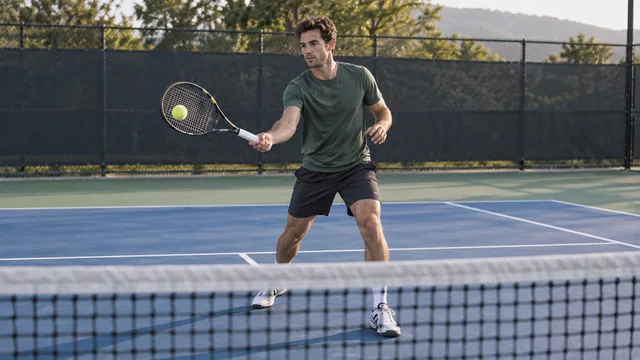
Use a continental grip so you can play the basic forehand and backhand volley without a large grip change. Hold the racket comfortably in front, with the free hand supporting the throat during preparation. Keep the knees soft and choose a balanced stance that allows you to move either way.
For a live feed, time a small split step around your partner’s contact. You want to be ready to move as the ball leaves the strings, rather than standing still until it is almost on you. Use small adjustment steps to create space for the stroke.
Do not confuse being ready with holding yourself rigid. Stay comfortable between shots and firm the grip enough at contact to keep the face steady. If your shoulders and hand stay tense throughout the feed, slow the exercise down and reset.
Give the racket less work to do
Turn enough to present the strings beside and slightly ahead of your body. The preparation is smaller than a groundstroke backswing. Meet the ball with a stable face and a short forward action, then return to a ready position for the next feed.
Think about controlling the incoming ball before adding your own pace. A large swing can make timing harder, especially when the feed is already close. Keep the action compact without freezing the arm or trying to jab at the last moment.
The ball’s height matters too. A comfortable-height volley and a ball below the net do not need the same flight. The lower ball needs enough upward travel to clear the net; chopping down at it takes away that margin.
Drill 1: One side and one generous target
The aim: Find a repeatable contact without rushing the preparation.
- Stand at a comfortable net position and ask for gentle feeds to your forehand.
- Volley toward a broad central area, leaving space inside the sidelines.
- Reset the racket and your balance after each ball.
- Try a small batch, such as five feeds, then repeat the same task on the backhand.
The batch size is simply a way to pause and compare. Ask the feeder to wait until you are ready, and keep the feed consistent enough that you are practising the volley rather than chasing every ball.
If reaching the target seems to require a large swing, shorten the feeding distance or bring the target closer. During these tennis volley drills, a manageable setup helps you notice the racket face and contact instead of forcing the ball to travel farther.
Drill 2: Alternate forehand and backhand
The aim: Return to a useful ready position between shots.
- Ask your partner to announce a forehand–backhand sequence.
- Turn and adjust your feet for each volley while keeping the same broad target.
- Bring the racket back in front after the stroke, rather than leaving it on the side you just played.
- When the sequence is comfortable, let your partner choose either side.
Changing from a known sequence to an unknown side adds a timing decision. It does not require harder feeds. Keep the ball speed cooperative so you can still organise the feet and racket.
If the backswing becomes larger or you start making late jabs, return to the announced sequence. The useful progression is the one that lets you recover between shots, not the one that produces the most hurried contacts.
Drill 3: Add a lower ball
The aim: Adjust the flight while keeping the volley compact.
- Begin with a few feeds at a comfortable height.
- Ask your partner to include an occasional lower ball on an agreed side.
- Lower through the legs, allow the face to open enough for clearance and send the ball over the net with margin.
- Recover to the ready position before the next feed, then gradually alternate the two heights.
A ball met below net height must travel upward before it can cross. Give it that space instead of trying to drive every volley straight down toward the target. You can choose a safer, higher flight while you learn to recognise the lower contact.
Keep the exercise cooperative. Save forceful high volleys for another practice once these basic contacts are reliable; mixing every volley type into one feed makes it harder to see what you are improving.
Read the miss before changing the stroke
The ball flies long: Check for an oversized backswing or a face that opened too far. Try a smaller action and compare another batch before gripping harder.
The ball goes into the net: Check the face angle and the clearance you allowed, especially when contact was low. Avoid cutting downward at the ball.
You feel jammed: Make space earlier with your feet. A late wrist movement is not a dependable substitute for a contact point beside the body.
You keep stretching: Adjust your starting position or ask for a more manageable feed. Once you can make comfortable contact, increase the movement challenge gradually.
Finish with a contact you can repeat
End your tennis volley drills with a few predictable feeds on each side. Compare them with the first batch and choose one cue for your next practice: a smaller preparation, more comfortable spacing or a steadier face. Keep that cue when you return to a cooperative rally, then add pace and uncertainty as the basic volley becomes more dependable.