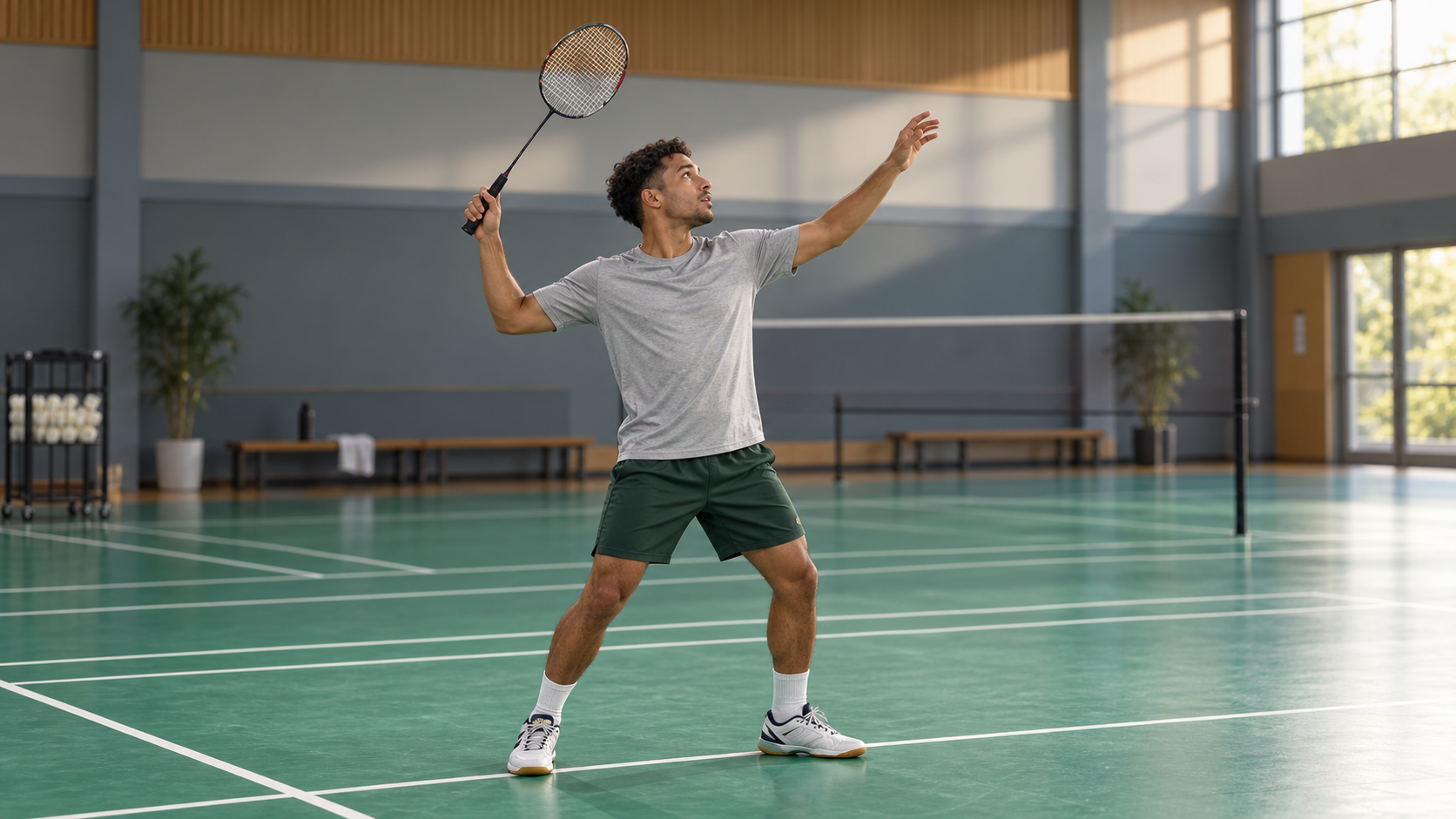
Your serve clears the net, then keeps climbing. The receiver steps in and attacks it before you have brought your racket back up. Trying to make the next serve barely touch the tape often produces the opposite problem: a shuttle in the net.
This badminton backhand serve session works on a low, repeatable start to the rally. It is aimed at recreational doubles players learning the short serve, rather than players trying to add a deceptive flick. Begin with a court, a few shuttles and a clearly chosen service box. A partner is useful once you add the return.
Decide what a useful serve looks like
The shuttle must travel into the diagonally opposite service box. For a low serve, aim to pass near the net and land toward the front of that box, beyond its short service line. Give yourself a margin inside the lines while learning.
A low flight can reduce the receiver's attacking options, but it does not guarantee a weak reply. Your preparation after contact matters too. Practice lifting the racket into a ready position as part of the serve rather than pausing to admire its flight.
Keep the preparation comfortable
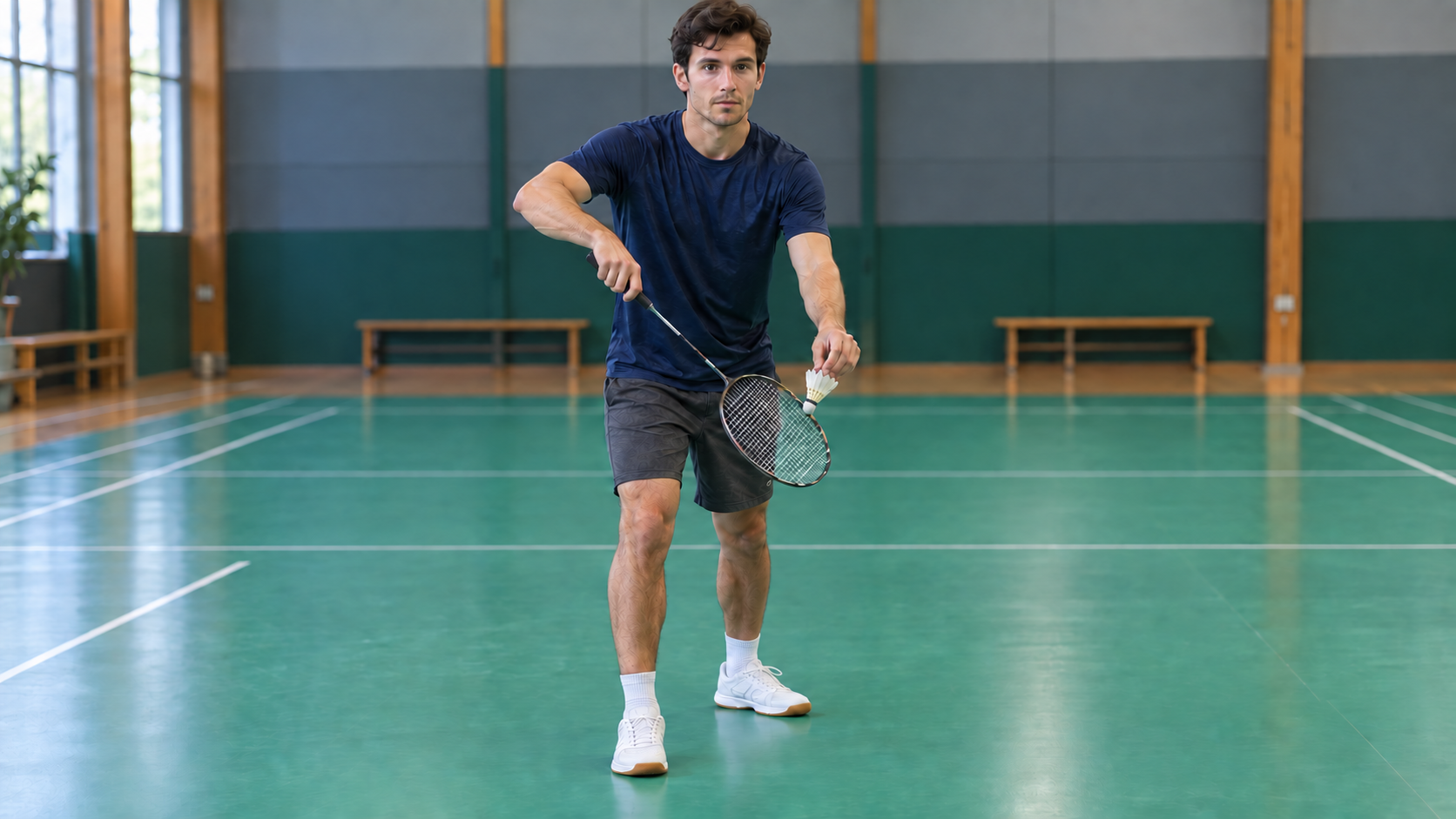
Use a relaxed thumb grip with the racket held in front of you. A racket-foot-forward stance is common, but you do not have to force one exact stance, elbow angle or distance from your chest. Choose a stable position that leaves room for a small forward stroke.
Hold the shuttle by its feathers with the base presented toward the strings. Take the racket back only a short distance, then push forward through the contact with a slightly open face. Release the shuttle for the strike; do not keep your fingers holding it while the racket hits it, and do not twist it to add spin.
Avoid a big upward flick when you intend a low serve. You need enough lift to clear the net, but the movement should be small enough that you can repeat it without a last-second jab.
Check the service rules before practicing
Under the BWF standard service law used here, the whole shuttle must be below 1.15 metres from the court at impact. The racket must first strike its base, and the forward service movement must continue until delivery. Part of each foot must remain stationary in contact with the court through the service. Stand inside the correct service court without touching its boundary lines.
Measure the height with a tape if you need a reference, and leave a margin below it. Stacked shuttle tubes are not a reliable measurement. Do not mix this standard height rule with alternative service laws used in particular categories; check your event's applicable rules.
Drill 1: Repeat the same gentle contact
The aim: Make the shuttle leave the strings consistently.
- Choose one service court and a broad area inside the opposite diagonal box.
- Set the same comfortable grip and shuttle position before each attempt.
- Serve five shuttles with a small backswing and smooth forward movement.
- Note which miss is most common: net, too high, too long or sideways. Adjust one detail and try again.
Five is a convenient practice batch, not a required training dose. If the shuttle leaves the racket inconsistently, check that its base is presented in the same position and that you are not tightening your grip early. Keep the target generous while you work on contact.
Drill 2: Match net clearance to landing depth
The aim: Lower the flight while still reaching the service box.
- Ask a partner to observe from a safe position beside the court. They watch the shuttle's height; you watch where it lands.
- Repeat the same low serve without aiming at the very edge of the short service line.
- If the serve floats, try a slightly smaller upward movement or a small face-angle adjustment. If it falls short, check that the forward stroke carries through the contact.
- Compare another batch before making a second change.
Do not fix every net miss by swinging harder. More force may only turn the next serve into a loose, high ball. Equally, a serve that looks beautifully low but lands before the service line has not met the task.
Drill 3: Serve and prepare for one return
The aim: Finish the serve ready to play again.
- Ask your partner to receive from a normal position and return gently to an agreed area.
- Serve with the same preparation, then bring the racket up and settle into a balanced ready position.
- Play the agreed return and stop. Reset before the next serve.
- Once you have time to prepare reliably, let the receiver choose between two controlled replies.
The partner should help you connect the serve to the rally, not try to win every practice point. If you are repeatedly caught before you are ready, return to the single predictable reply. In doubles, include your partner in deciding who covers that first return.
What to change when the serve breaks down
It keeps floating: Check whether the racket lifts sharply at contact or whether you squeeze and jab after a hesitant preparation. Keep the forward movement small and continuous.
It keeps hitting the net: Check the racket face and shuttle presentation before adding power. Use a little more clearance while rebuilding consistency.
The direction changes: Start by checking where the racket face points at contact and whether your preparation changes. Do not rely on a fixed map of racket-string corners to select serve direction.
It works alone but not against a receiver: Add the receiver gradually through the third drill. Keep your preparation familiar and wait until both players are ready, without introducing an undue delay.
Take one observation into your next game
Compare your last batch with the first. Look at legal serves that reach the chosen area, their flight height and whether your racket is ready for the reply. Pick the most useful change to repeat next time. Add speed or a flick variation only after this low serve has a dependable starting point.