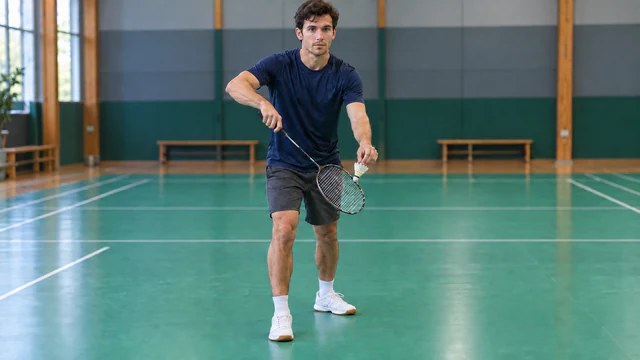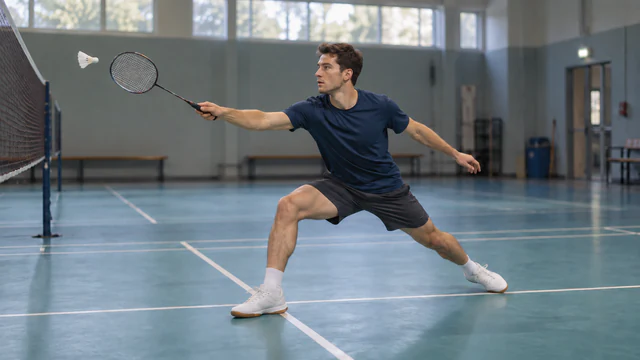
You reach the shuttle in the rear court, see space near the net and try to take the pace off. One drop floats too far, the next catches the tape. When the shot finally lands where you wanted, you are still watching it as your opponent plays the reply.
These badminton drop shot drills help you build a more repeatable forehand overhead drop. We will work on the straight shot first, from the rear court into the opponent’s forecourt. You need a partner, several shuttles and enough space to move back and recover. Keep the feeds cooperative while you learn the contact; deception and difficult cross-court variations can come later.
Know what you are trying to produce
A useful drop brings the shuttle into the forecourt while leaving you balanced enough to continue the rally. Landing close to the net is part of the task, but it is not the whole task. A very slow shuttle can give the receiver time to move forward, even when the eventual landing looks short.
Choose a generous straight-ahead target and give the shuttle room to clear the tape. At first, watch the flight and your recovery as well as the landing. You are looking for a shot you can repeat, rather than a single perfect shuttle that depends on a last-second touch.
Prepare as you would for a clear
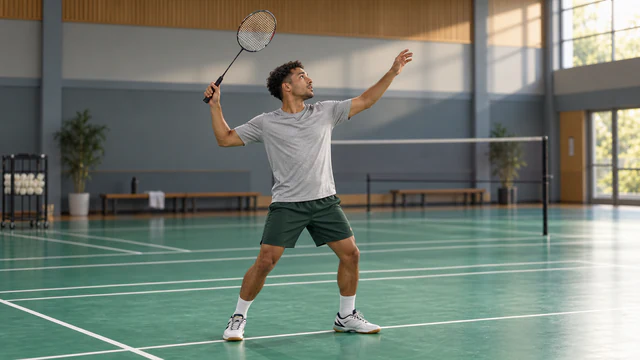
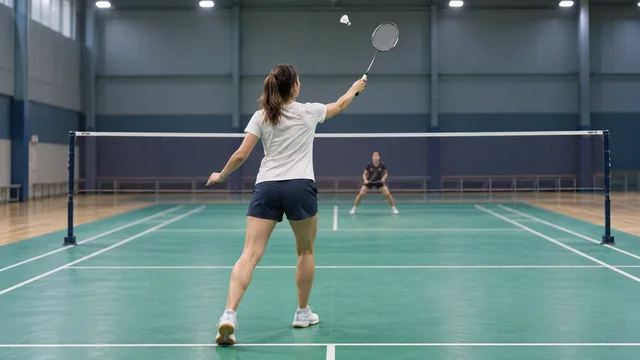
Move behind the incoming shuttle early enough to turn side-on and prepare the racket. Use a forehand grip and leave room to reach up comfortably. Contact should be above and slightly in front of the racket shoulder, rather than behind your head after you have run out of time.
High contact means reaching the shuttle in a usable overhead position. It does not mean waiting for a high lift at the highest point of its flight. If the feed repeatedly leaves you stretching backward, change the feed or your starting position before trying to solve the problem with your hand.
The early preparation should resemble your clear. From that familiar setup, control the hitting action so the shuttle travels shorter. Avoid stopping the racket and poking just before contact. You do not need to add a jump or a slice to begin learning the straight drop.
Drill 1: Find a repeatable straight drop
The aim: Connect a comfortable contact with a consistent landing area.
- Ask your partner to send high, predictable feeds to the same rear-court position.
- Move into position and prepare the racket before the shuttle reaches you.
- Play a straight drop toward the broad forecourt target, then recover to a balanced position.
- Try a small batch, such as five shuttles, and note the most common result before changing anything.
Five is simply a manageable batch for observation. Let your partner wait until you are ready rather than feeding faster to make the exercise harder. If you cannot reach a comfortable contact point, stop and reset the feed.
Compare the misses. A group landing too deep suggests a different adjustment from a group catching the net. Keep the target and feed steady so you can tell whether the change you make has helped.
Drill 2: Alternate a clear and a drop
The aim: Keep the early preparation familiar while changing the shot’s length.
- Use the same cooperative feed as in the first drill.
- Play a straight clear, recover, then play a straight drop from the next feed.
- Ask your partner to watch whether your setup becomes noticeably smaller when you intend to drop.
- Repeat the pair at a pace that lets you prepare fully for both shots.
During these badminton drop shot drills, similar preparation does not mean that every part of the stroke must have identical speed. You still need to control the hitting action to send the shuttle a different distance. Avoid swinging as hard as a clear and relying on an abrupt stop to shorten the flight.
If the drop starts going repeatedly into the net or too deep, return to a few fixed drops. Restore the contact first, then bring the clear back into the sequence.
Drill 3: Drop, recover and play the next shuttle
The aim: Make recovery part of the shot rather than an afterthought.
- Work cooperatively in a straight half-court pattern.
- Your partner lifts; you move back and play the straight drop.
- They return it gently toward the net, and you move forward to play the next shuttle.
- Stop, reset and repeat before turning the pattern into a longer exchange.
Begin recovering when your stroke finishes. Waiting to see exactly where the drop lands makes the next movement harder. Keep the net reply predictable at first, so you can connect the overhead shot to moving forward without guessing the next direction.
This is a movement progression, not a race against the feeder. If you arrive late every time, reduce the pace and return to the first drill when necessary.
What to change when the drop breaks down
It travels too deep: Reduce the hitting impulse slightly and check whether contact has drifted behind you. Make one adjustment, then compare another batch with the same feed.
It catches the net: Give yourself more clearance and check that you reached a comfortable overhead contact. Trying to skim the tape on every attempt can hide an inconsistent starting position.
The landing is good but you cannot recover: Keep the shot simple and begin moving as the stroke finishes. Use a predictable reply until the recovery feels manageable.
Your partner reads the drop early: Compare the preparation for your clear and drop. Work on making the early setup familiar before adding more difficult variations.
Take one observation into the next session
Finish your badminton drop shot drills with another short batch of fixed feeds. Compare it with the opening batch: is the contact easier to repeat, does the shuttle reach the chosen area, and are you ready to move again? Choose one cue to keep for your next practice. You can build more variation around the straight drop once that starting point is dependable.