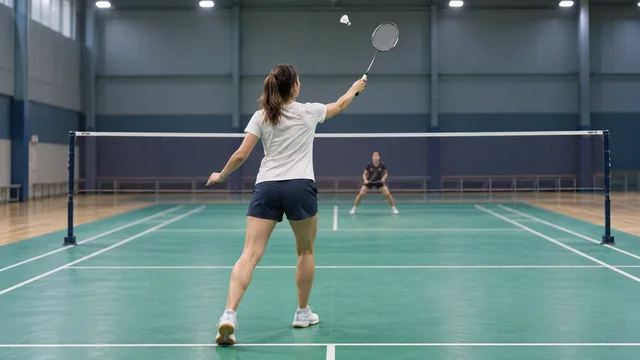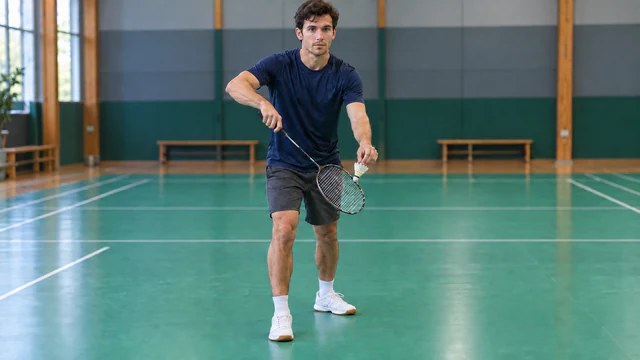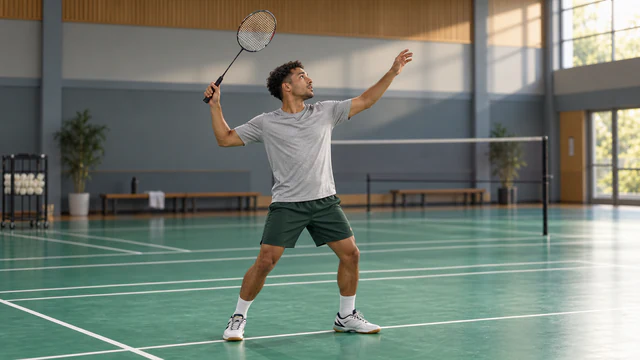
You reach the shuttle near the net, but the return pops up and gives your opponent an easy attack. On the next attempt you barely touch it and it fails to cross. The difference can feel frustratingly small, especially when you are arriving in a hurry and trying to judge the racket face at the same time.
These badminton net shot drills separate touch from movement before bringing them back together. They are for players learning to return a reachable shuttle from the forecourt into the opponent's forecourt. Start with a simple straight net shot. Spinning variations, deception and net kills can wait until you have a contact you can repeat.
Know which shot you are practising
A net shot starts near the net and finishes near it on the other side. It is different from an overhead drop played from the rear court. In this session the incoming shuttle is below tape height, so it needs enough upward flight to clear the net before it can fall. Trying to hit downward from that position is not a shortcut to a tighter return.
Give yourself a visible margin over the tape at first. A shuttle that crosses reliably and stays in the forecourt is a more useful starting point than one spectacular net cord followed by several misses. As your contact settles, you can refine the height without changing the whole action.
Make the contact small and clear
Hold the racket in front so you can reach toward the shuttle without first pulling it far behind you. For a forehand net shot, use a comfortable forehand grip; on the backhand side, adjust toward a thumb grip. Keep enough control to present the strings, without squeezing continuously as hard as you can.
Think of a short, gentle contact rather than a jab. The racket face and the small amount of forward movement work together to send the shuttle across. You are not catching or carrying it on the strings. If a coaching cue such as “soft hands” makes the racket wobble, keep the hand quieter and shorten the motion.
Drill 1: Find the flight from a settled position
The aim: Recognise the contact that sends the shuttle across without making it sit up.
- Stand close enough to the net to meet an easy feed comfortably on your own side.
- Ask a partner to toss one shuttle at a time to the same forehand contact area, from clear of your racket path.
- Play a straight net shot with a short movement, then watch its height and landing.
- Repeat a small batch before switching to the backhand side and adjusting the grip.
Do not change sides on every feed yet. A repeated position makes it easier to tell whether the contact itself is consistent. Ask your partner to keep the toss similar; a feed that alternates between very high and very low is a different problem.
If the shuttle rises too far, reduce the push slightly and check how open the face is. If it hits the net, do not simply soften the next attempt further. Check that you have given it enough upward direction to cross.
Drill 2: Add one comfortable lunge
The aim: Keep the same touch while your body moves toward the shuttle.
- Start a small step farther away than in the first drill.
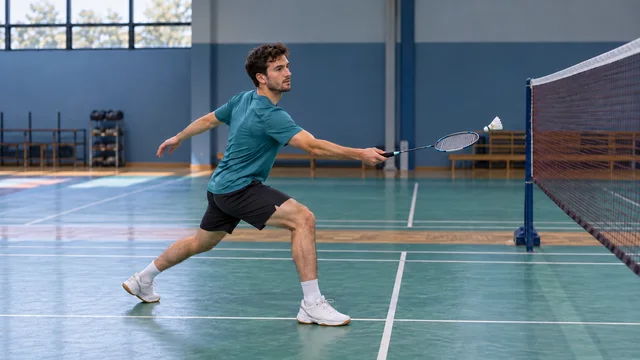
- Reach the racket toward the incoming shuttle as you move into a controlled lunge on the racket side.
- Keep the contact short, allowing for the forward movement you already have.
- Push back out of the lunge and bring the racket into a ready position before the next feed.
Start close enough that you can arrive without overreaching. This is a coordination exercise, not a test of your maximum lunge distance. Keep the knee and foot comfortably aligned and choose a pace that lets you recover under control.
The shuttle may travel farther now even when your hand seems to do the same thing. Your body is moving forward too. In these badminton net shot drills, reduce the extra hand action before assuming you need a completely different grip. Return to a settled feed if the movement makes every contact unpredictable.
Drill 3: Keep a cooperative net exchange going
The aim: Recover and prepare the appropriate grip for the next shuttle.
- Begin with straight net shots on one side, using a comfortable margin above the tape.
- Keep the exchange cooperative so both players have time to prepare.
- Once that is repeatable, let your partner feed either of two reachable forecourt positions.
- Choose the forehand or backhand preparation from the incoming shuttle and recover after each return.
Agree to restart when a feed becomes too low or too far away for the exercise. Forcing a net shot from every difficult position can turn the drill into repeated reaching. In a match, another shot may be the better option; here you are developing touch on a manageable feed.
A short run of controlled exchanges is enough to compare with the first drill. Notice whether the first moving shot is loose or whether the touch deteriorates only after several returns. Those patterns suggest different next steps: a smaller entry movement, or a more deliberate recovery between contacts.
Use the miss to choose the next adjustment
A high return may come from too much push, an open face or hurried arrival. A netted return may come from insufficient lift or a late contact that leaves little room to work. Neither miss identifies one universal fault on its own. Return to the easy feed and change one thing so you can see what helps.
Finish the badminton net shot drills on the side you found less comfortable. Keep one clear cue for the next session, such as presenting the racket earlier or making the hand movement smaller during the lunge. Reliable touch gives you something to build on when the rally becomes less predictable.